
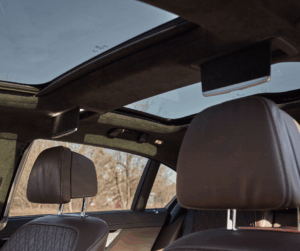
 For many Houston drivers, it can be confusing how a stray rock might cause irreparable damage to your vehicle’s side auto glass window, but only a small chip to your windshield. While the difference might seem like a simple matter of location or usage, the truth is that the type of safety auto glass on different locations of your vehicle is highly intentional. At Affordable Auto Glass in Houston, our team cannot only ensure that your safety glass is suitable for each component of your vehicle, but also that our clients understand the key differences and how they impact your daily commute. The two distinct types of safety auto glass include:
- Laminated Glass
- Tempered Glass
Many drivers probably assume that all types of glass on their car, from the windshield to the windows to the moonroof, are the exact same kind of auto glass. However, designers actually use each type of glass strategically based on the unique hazards that each pane might encounter. Use this blog as a guide to understanding where and why each type is used for optimal performance.
The Unsung Safety Roles of Auto Glass
The biggest mistake you can make as a Houston driver is thinking of auto glass as a simple shield against wind and rain. In most modern vehicles, the windshield and side windows are actually integral to the car’s safety system. They do this by providing key structural support, occupant retention during collisions, and offering integral airbag support.
The glass in your car offers structural support primarily through the windshield pane. While it might seem like its prime role is simply offering visibility while driving, in the event of a severe, rollover collision, the windshield glass can actually play a key role in preventing a roof collapse.
During car accidents, broken glass and excessive force extremely commonly injure passengers. In high-force collisions, auto glass plays a critical role by serving as the final layer of defense against passenger or driver ejection, which is the leading cause of severe injury and fatalities.
Lastly, airbag support is the most essential aspect of vehicle safety on the road – especially in cities like Houston with constant, back-to-back traffic and thousands of daily commuters. This is because airbags require strong, in-tact auto glass to act as a durable backstop during deployment. When the glass is unstable or weakened by cracks or chips, it isn’t able to fully support the airbags, forcing them to deploy outward instead of inward. This can completely compromise their effectiveness and put the driver in immense danger.
Deep Dive: Tempered Safety Auto Glass
The auto glass in your side and rear windows has one critical role: to prevent safety failures. Because of this, tempered auto glass is typically used in these spaces. What is tempered glass? Glass manufacturers create tempered glass during the normal manufacturing process by taking the cut and shaped pane and putting it through an intensive heat treatment. Throughout this process, we heat the glass to over $1200^{\circ}\text{F}$ and then rapidly cool it with forceful air. This process creates significant internal stress within the glass’s chemical makeup. Internal stress makes the glass considerably stronger than regular, untreated glass. Not only does this increase the internal strength, but also the outward strength, making it up to 5 times stronger than regular glass.
Additionally, tempered glass has a unique break pattern that is ideal for car accidents and helps prevent lacerations from sharp, jagged shards. This is because the internal stress breaks instantly upon impact – instead of gradually cracking and shattering into sharp pieces. When this happens, the pieces break into small, blunt, pebble-like pieces that won’t harm the passenger’s skin during a potential wreck.
In order to reap the full benefits of tempered glass within your vehicle, it is typically placed in the following spots:
- Side windows
- Rear windows
It is often placed in these spots because it is extremely strong, but also breakable. Meaning that occupants can break it from the inside in case of emergency evacuation.
The primary reason these spots are typically made of tempered glass is that they play the largest role in preventing glass shards from injuring drivers and passengers during accidents. The only downside of tempered glass is that its shattering pattern makes repair impossible, forcing replacement in almost every situation.
The Safety Sandwich: Why Laminated Auto Glass is Your Windshield’s Lifeline
While tempered glass combats safety failures during auto glass incidents, laminated glass is essential for safety retention. Its designers geared its design toward staying intact during emergency situations instead of emphasizing breaking safely. Engineers designed it not only to stay intact but also so people can easily repair it when small chips or cracks occur, which makes it extremely affordable and dependable.
Manufacturers make laminated glass by creating a sandwich of layers of glass with a PVB interlayer. The PVB is a strong, yet perfectly clear, plastic film that tightly holds the two panes of glass together – creating an extremely strong pane that is ideal for windshields.
What makes it ideal for windshields? Laminated safety auto glass is suitable for windshields because of its extremely rigid strength, making it ideal for supporting roofs even through serious rollover events. Additionally, laminated glass works ideally for front auto glass because the sticky plastic interlayer keeps the entire pane intact when it breaks. This keeps shards from falling onto vulnerable parts of the driver’s body, such as their head, face, or neck.
The final, but most significant benefit of laminated glass is that it is easily repairable if the damage is less than the length of a dollar bill. At Affordable Auto Glass in Houston, we typically do this by first thoroughly cleaning out the chip or crack with a high-pressure vacuum to ensure the damage is free of glass shards or debris. Next, we inject liquid resin into the damage until there are no gaps or air bubbles; finally, we cure the liquid resin with a high-powered UV light. This hardens the repair and makes it extremely durable, without impacting the clarity of the pane.
Acoustic, UV Protection, and Smart Auto Glass Innovations
Auto glass doesn’t just offer safety and clear visibility; there are also numerous new developments that provide heightening technological advancements. These modern innovations help by offering things such as acoustic soundproofing, helping keep irritating traffic noises outside of your car. Additionally, solar control UV protection offers protection from the sun while driving. Laminated glass with thicker, more insulated layers of PVB most often creates these.
Why Your Auto Glass Choice Matters For Safety and Efficiency
If you’re a Houston driver, then it is imperative to begin looking at your auto glass as a strategic tool for both your safety and your vehicle’s efficiency. Understanding the differences between laminated and tempered auto glass is essential for car ownership and being knowledgeable about what might happen in the event of a car accident. Our entire team at Affordable Auto Glass in Houston trains fully on the types of safety glass that best suit each aspect of your vehicle, giving you the confidence you need on your Houston commute. Contact us today for a free consultation on auto glass repair or replacement.