
Quick Answer
The install itself takes about 60 minutes, but you should wait for the safe drive-away time, usually one hour to a few hours, before driving. The wait depends on the urethane used, the temperature, and humidity. If your vehicle needs ADAS calibration, add roughly 30 to 90 minutes.
Two clocks run during a windshield replacement. One is how long the technician works on the car. The other, and the one that actually matters for your safety, is how long the adhesive needs before the glass is truly bonded. Confusing the two is how people end up driving on a windshield that is not ready.
 The Two Timelines You Need to Track
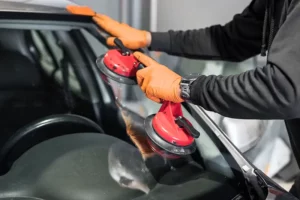
- Install time: Removing the old glass, prepping the frame, applying urethane, and setting the new windshield typically takes around an hour for a standard vehicle.
- Safe drive-away time: This is how long the urethane needs to develop enough strength to hold the glass during a crash or airbag deployment. Modern fast-cure adhesives can reach a safe drive-away time in about an hour, while others need several.
A reputable shop will tell you your specific safe drive-away time in writing before you leave. If no one gives you that number, ask for it.
Why This Matters
Until the urethane cures, the bond is not at full strength. Drive too soon and hit a hard bump on a rough Houston road, and the glass can shift. In a collision, an improperly cured windshield can pop out, which removes the backstop your passenger airbag needs and weakens roof support in a rollover.
This is the part drivers most often underestimate. The job can look finished while the adhesive is still working. Respecting the cure window is not caution for its own sake. It is the difference between a windshield that performs in a crash and one that fails.
How Houston Weather Changes the Clock
Local climate affects cure time in ways that surprise people.
- Humidity helps: Most automotive urethanes are moisture-cure, so Houston’s high humidity often speeds curing rather than slowing it.
- Heat is a mixed factor: Warm temperatures generally support faster curing, but extreme dashboard heat and direct sun can affect handling, which is why a shaded or indoor cure is ideal.
- Cold snaps slow it down: On the rare cold, dry Houston morning, urethane cures slower, so the safe drive-away time can stretch.
This is one reason a controlled windshield replacement environment matters.
When Calibration Adds Time
If your vehicle has a forward-facing camera, the install is not finished when the glass is set. The camera must be recalibrated. There are two methods, and they take different amounts of time.
- Static calibration: Done in the shop with targets and measured distances, typically adding 30 to 60 minutes.
- Dynamic calibration: Done by driving the vehicle on the road while the system relearns, which can add similar time depending on traffic.
Skipping this step is not an option on equipped vehicles. Proper ADAS calibration is what keeps lane-keep and automatic braking accurate.
Common Mistakes That Undo a Good Install
- Hitting the freeway immediately: Merging onto I-10 at speed before the cure is complete puts pressure on a bond that is not ready.
- Slamming doors with windows up: The pressure spike inside a sealed cabin can push against fresh glass. Crack a window for the first day.
- Peeling the retention tape early: That tape holds molding in place while it sets. Removing it too soon invites leaks and wind noise.
- Running it through a car wash: High-pressure water can disturb an uncured seal. Wait at least a day or two.
- Ignoring the safe drive-away number: The install being done does not mean the adhesive is done.
Comparison: Rushing Off vs Waiting It Out
- Waiting the full safe drive-away time: Costs you an extra hour of patience and gives you a windshield bonded to full strength, a clean seal, and correctly calibrated safety systems.
- Driving the moment it looks done: Saves a little time today and risks leaks, wind noise, a shifted windshield on rough roads, and a glass that may not hold in a crash.
The honest tradeoff: the time you save by leaving early is small, and the risk you take on is large. For a part that protects your life, the wait is the easy call.
Why Choose Affordable Auto Glass
- Experience: Technicians who select the right adhesive for the day’s conditions and give you a clear safe drive-away time, not a vague guess.
- Reliability: Efficient installs that respect the cure window, plus mobile appointments timed so your vehicle is ready when you need it.
- Quality and technology: Fast-cure professional urethane and in-house calibration, so both clocks are handled correctly under one roof.
- Service area and coverage: Serving the Greater Houston Area with scheduling that works around your day. Request a quote to lock in a time.
Frequently Asked Questions
How soon can I drive after a windshield replacement?
Follow the safe drive-away time your installer provides, often one hour to a few hours. The install being finished is not the same as the adhesive being cured.
Does Houston humidity slow the cure?
Usually the opposite. Most urethanes are moisture-cure, so high humidity often speeds the bond rather than slowing it.
How long does the whole appointment take with calibration?
Plan for about an hour for the install plus the safe drive-away wait, and add roughly 30 to 90 minutes if calibration is required.
Why should I leave a window cracked afterward?
Slamming a sealed door spikes cabin pressure against the fresh glass. A slightly open window relieves that pressure for the first day.
When can I wash my car?
Wait at least a day or two. High-pressure water from a car wash can disturb an adhesive seal that is still curing.
What if I drive before the safe drive-away time?
You risk leaks, wind noise, and a windshield that has not reached full bond strength, which compromises its role in a crash or rollover.